

Having spent a month traveling India, a country of over a billion people representing dozens of ethnic minorities and languages, you’d think we would have figured out a trick or two as we prepared for China? Travel experiences lead to fewer surprises, right?
Fat chance.
Like India, China snuck up on us, offering tons of surprises (mostly pleasant) and displaying sides of this complex, enormous and surprisingly approachable country that we hadn’t imagined.
Here are some quick observations (and have a look at our photographic highlights here).
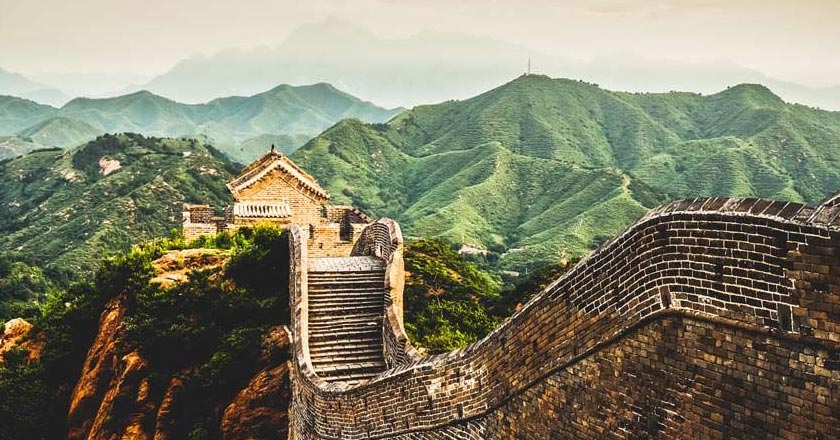
It’s beautiful. The cities are packed with fascinating architecture and gorgeous public parks, walking streets and monuments. Enormous sums have been spent on public art featuring classic and contemporary sculpture. It is everywhere. And once you’re out of the city centers, the mountains, lakes, streams and fields take over, providing vistas that are green and lush, vast and tranquil. Yeah, there’s plenty of pollution around the urban centers (Chongqing was packed in with smog while were there, but it tended to lift in the afternoons giving us a great view of the city and Beijing was simply insufferable) but we read a lot online about the significant inroads China has made in reducing air and water pollution in recent years. Long way to go, but you can see the progress.
It’s remarkably clean. I guess when you have plenty of human hands at your disposal it’s a no-brainer to discharge them to sweep, rake, cut, wipe and generally fuss about to keep the public areas sparkling. But despite having spent time in Chongqing, a city of 28 million, Chendgu, with a population of 14 million, and Emei and Leshan, smaller metropolis (metropolisi?) with only 435,000 and 1.2 million people, respectively, we have yet to see any garbage, trash or messes. We’ve seen countless people in reflective vests picking up cigarette butts with long bamboo tongs, people on mountain passes sweeping up leaves and a bazillion trash and recycled bins. Sure, our expectations of cleanliness are appallingly low after three years living in plastic- and garbage-strewn Cambodia, but I’d thought that with all those Chinese consumers running about there would have been much more of a mess. Not so.
Even touristy kitsch has a measure of class. Chongqing’s Liberation Square offers Food Street (anchored by a McDonalds, horrifyingly) but with clean streets and plenty of trash bins to collect the millions of bamboo sticks used to grill all sorts of meats. Chengdu’s Jingli and “Wide and Narrow Alleys” tourist destinations pack thousands of visitors in each day but have retained a sense of cultural identity that would do any city proud. Leshan draws thousands of tourists to see the giant sandstone Buddha carving but channels tourists to the site via a clean, tree-lined boulevard along the Min River or on one of the well-maintained tourist boats that ferry visitors along the sculpture’s front.
People are friendly. We didn’t encounter as much as one crabby vendor, fellow traveler, storekeeper or airport or train station worker, despite the fact that our Chinese was limited to whatever words I was able to conjure up on my smartphone Mandarin translation app. We encountered countless smiles and friendly people who have gone way out of their way to help. Like the cab driver who pulled to the side of the road and waved us into his cab to take us to the Leshan bus station despite the fact that he already had a young woman fare in his car. (She happened to speak English and may have taken pity on two people who were obviously lost, wandering the busy road.) And like the incredible Frank Liu, who took pity on us as we struggled to hail a cab in Lijiang and not only saw us to our destination but insisted on picking up the tab. (Update: Frank and I continue to keep in touch, and I have every intention of fulfilling my promise to make sure he’s treated in the US as well as we were in China when he finally saves up enough to visit.)
The food was disappointingly bland. We repeatedly asked for Sichuan spicy but got Chinatown boring. Come on, China! Hit me! We’re Asian veterans with palates up to the challenge. It was like going to a Justin Bieber concert and slumping into your chair, despondent, when you realize he can’t sing a lick. Actually, it’s nothing like that at all, as I was actually looking forward to spicy Chinese food.
The language barrier was less an issue than we’d anticipated. Whenever we found ourselves stuck by lack of Chinese language skill, we were able to point our way to salvation or we bumped into someone who bailed us out. Like the nice guy at the hot pot restaurant in Chongqing who helped us order off a Chinese-only order sheet in a restaurant with no English, no photos and many dishes offering stuff we didn’t want to eat (like entrails, duck blood and organs best used for biology class or animal reproduction).
Travel is organized, inexpensive, high quality and simple. We were advised to arrive at the train station in Chongqing two hours before our departure to Chengdu but wound up killing an hour and a half playing cards and making pals with the baggage handlers. We had bought our tickets online, and transferring to paper tickets was easy and straightforward, again despite the fact that the ticket agent spoke as much English as I did Chinese. Ditto for the bus station in Chengdu (despite some confusion on my part about the departure time, which an information agent who spoke English cleared up for me in a hurry and got a good laugh out of my clumsiness). Trains and buses were clean, efficient and signed (even in English, often) and departed and arrived alarmingly on time.
Yeah, there was tons of confusion, but that’s part of the magic of traveling on our own, away from tour groups and leaving us exposed to all sorts of silliness.
Like the young man who tested his English with us near the top of Mt. Emei, pointing to the path upward with a huge grin and an encouraging invitation to join him in his hike: “It’s only six kilogram meters to the top.”