
“You should go to the Isle of Man,” my mother often said. “It’s where our ancestors came from.”
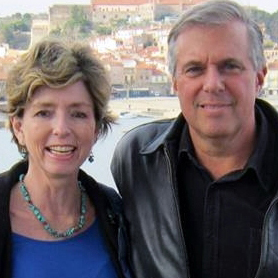
“We should go to the Isle of Man,” I said to Skip a couple of months ago. To which he replied, “Let’s go”. And so a plan was hatched.
For years, I’d heard tales about King Orry from the Isle of Man since he bore the same last name as my mum’s maiden name: Orry. She thought we might be descended from this noble line so I took it upon myself to dig deeper. Sadly, I wasn’t able to find a direct link to the King (familiarly known as Godred Crovan). However, thanks to our fact-finding friend, Mel Stratford (who did a superb job of delving into my ancestry), I discovered more than I had ever imagined. Not on the Isle of Man, but in Yorkshire.
Since my mum died in 2024, I’d taken possession of an enormous leather-bound tome from my grandmother’s day called The Plantagenet Roll of the Blood Royal, which featured a comprehensive chart of my ancestors, dating back to King Edward III in the 14th century. My grandmother, Emily Ada, was listed as 19th in line from the king and, since her maiden name was Ingelby, it opened up an entire Pandora’s box of genealogical data.
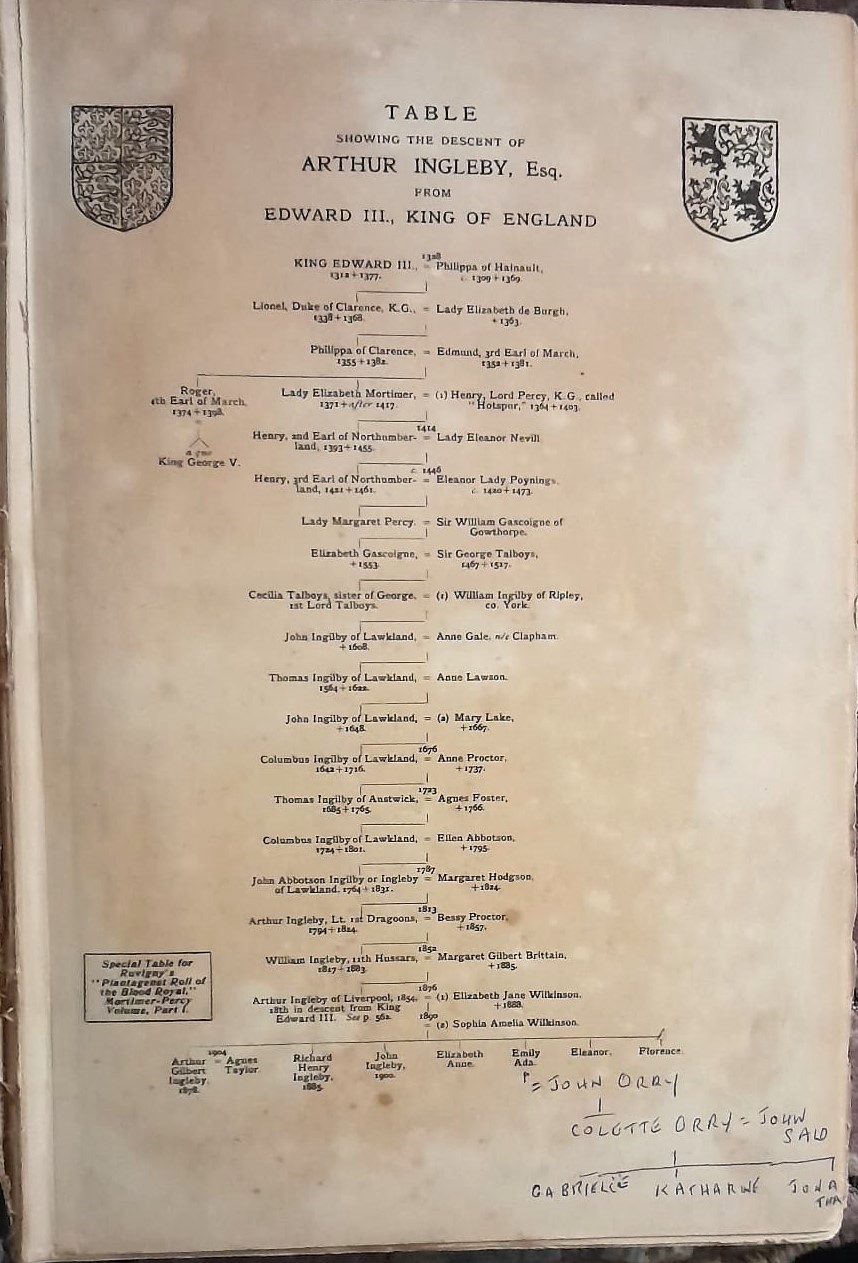
What I was to discover included a family of saints and sinners, knights and barons. They owned land, stately homes, and even a castle. So, Skip and I decided to track down the Ingelby roots as best we could.
Since the initial interest began with my mum, we planned a route that would trace her lineage – from Blackpool (where she was born) to Liverpool (where she grew up during the war), to the Isle of Man (where she believed we had ancestry) to Yorkshire (where it turned out the Ingelby name was extremely significant).
And here’s some of what we found on our twelve-day journey.
It began in Liverpool where we drove through the neighbourhood where Mum lived and went to school at La Sagesse Convent during the war (no longer there). We drove along Stanley Lane, where my great grandfather, Arthur Ingelby lived, and down Spellow Lane where his father (also called Arthur) lived. All very different from how it looked back then, of course.
Then we had one of the best experiences of the trip.
I’d learned from Mel that some of my ancestors were buried in Anfield cemetery and even had a description of the gravestone (“Large white stone, curved top, small raised shoulders, lying flat on its back, badly weathered”). So we wandered around the cemetery grounds looking for it. Most of the stones were dilapidated and illegible so it was impossible to find anything. Then we spotted two fellows in a truck and Skip approached them for help. Turned out they were gravediggers who were happy to lend a hand, and within minutes had located a broken-down stone lying in the soil. The men leapt into action, using flat stones to scrape away at the stone until the inscription was legible: In affectionate remembrance of / Elizabeth Jane, / wife of Arthur INGLEBY, / who died July 16th 1888, aged 34 years. / Also Sophia, / daughter of the above, / who died June 24th 1888, aged 14 days. / Also Ann Jane, / wife of Richard Henry WILKINSON, / who died Feby 31st 1880, aged 49 years. / Also William, / husband of Margaret Gilbert INGLEBY, / who died Novr 21st 1883.
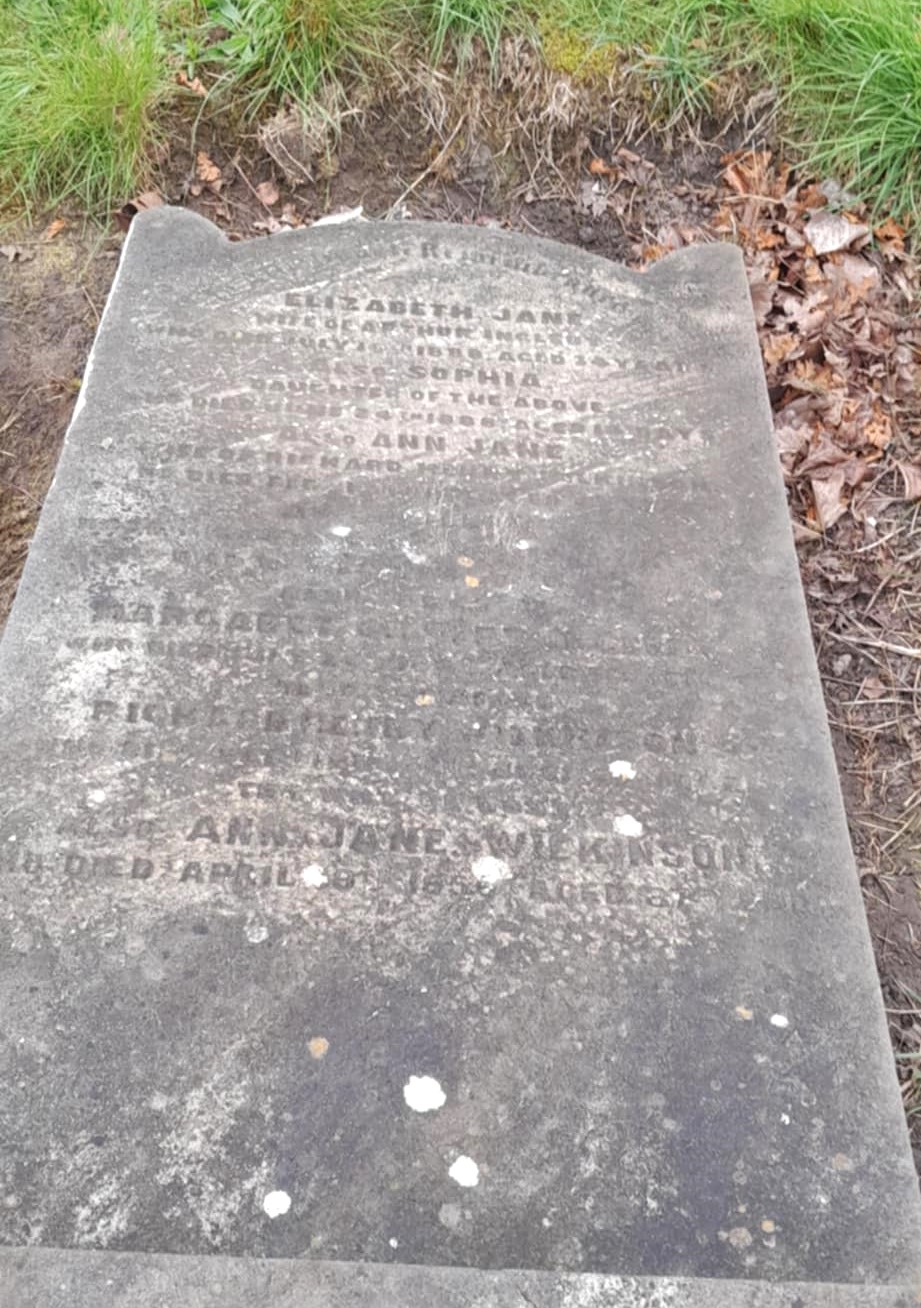
It was a moment of reflection – knowing that ancestors I’d never heard of were buried on this spot. One of the gravediggers gave me a big hug and I scattered roses at the site, in remembrance of long forgotten family members.
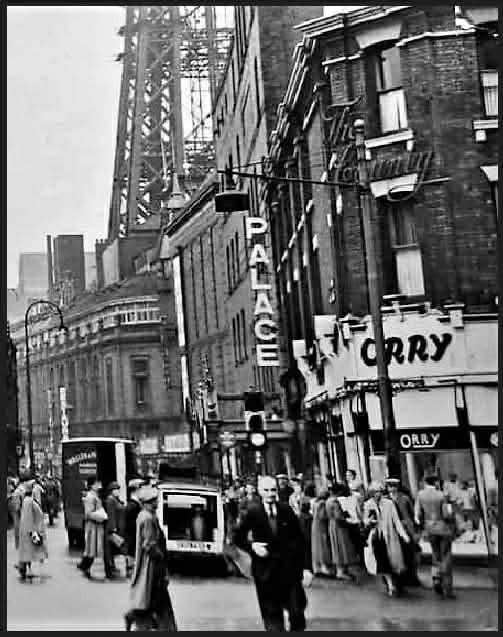
Next came Blackpool where my grandparents lived and grandfather, John Francis Orry, owned a gentleman’s outfitters named Orry’s. I found the location of the store (now a slot machine parlour) as well as the house on Empress Street where they lived (now a luxury small hotel named Empress Hall ) I’m guessing my family lived in a flat in the house as they weren’t well off enough to own the entire place and my grandfather was struggling to survive as his shop eventually landed him in debt.
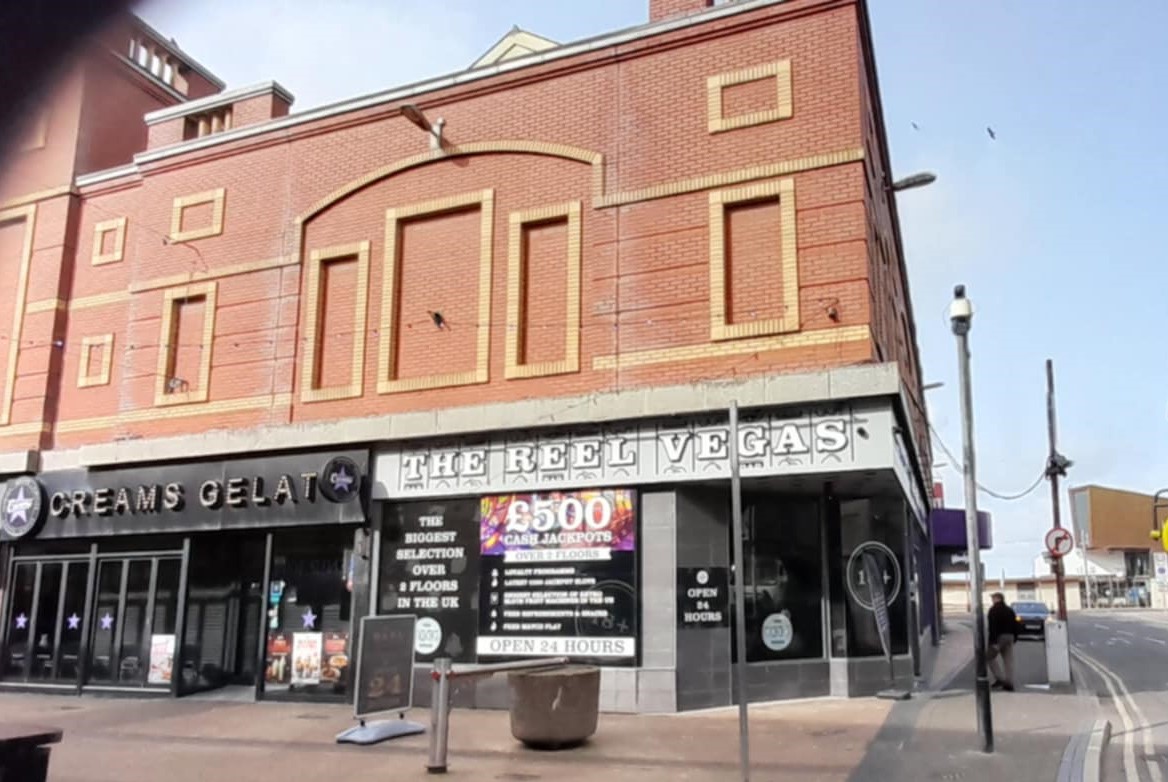
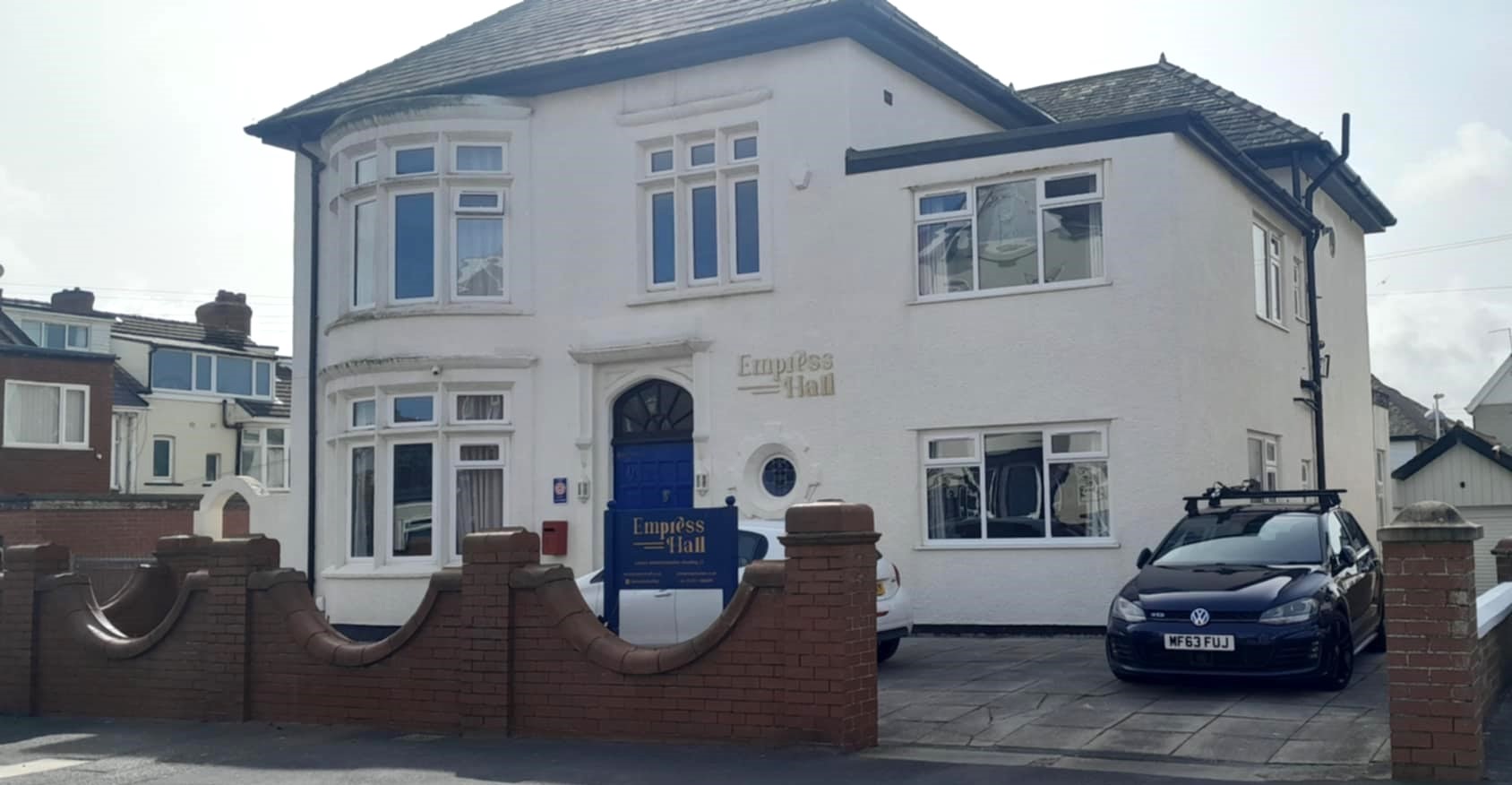
From Lancashire our journey took us across the Irish Sea to the Isle of Man (a self-governing British Crown Dependency located between England and Ireland). While we weren’t related to jolly old King Orry, I discovered my great grandfather Arthur was born there in 1854 but didn’t spend too many years on the island, since the family headed to Yorkshire.
So we did, too.
And in Yorkshire we found a trove of ancestral treasures.
I mentioned earlier about the genealogy book listing hundreds of names, dates and charts of my ancestors. Now, thanks to onlinesearch and multiple ancestry sites, I know more about them. And there’s an overwhelming abundance of colourful, significant people in my past.
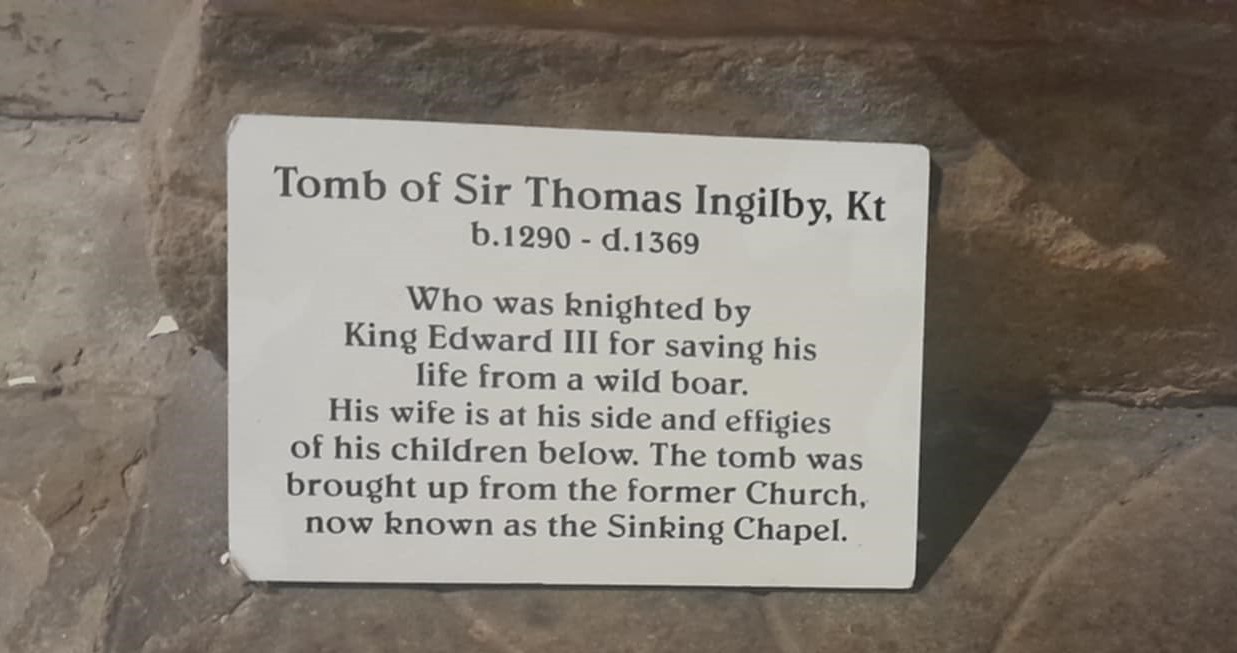
The story began in 1308, when Sir Thomas Ingilby married the heiress, Edeline Thwenge. The lady came with a very substantial dowry: Ripley Castle and its surrounding estates. It’s still owned by the Ingleby (Ingilby) family so Skip and I visited the gorgeous castle (now for sale at an asking price of £7.5 million), and walked in the footsteps of Ingilbys who have lived there for 700 years (the spelling of the name changed from Ingilby to Ingelby in the 18th century).
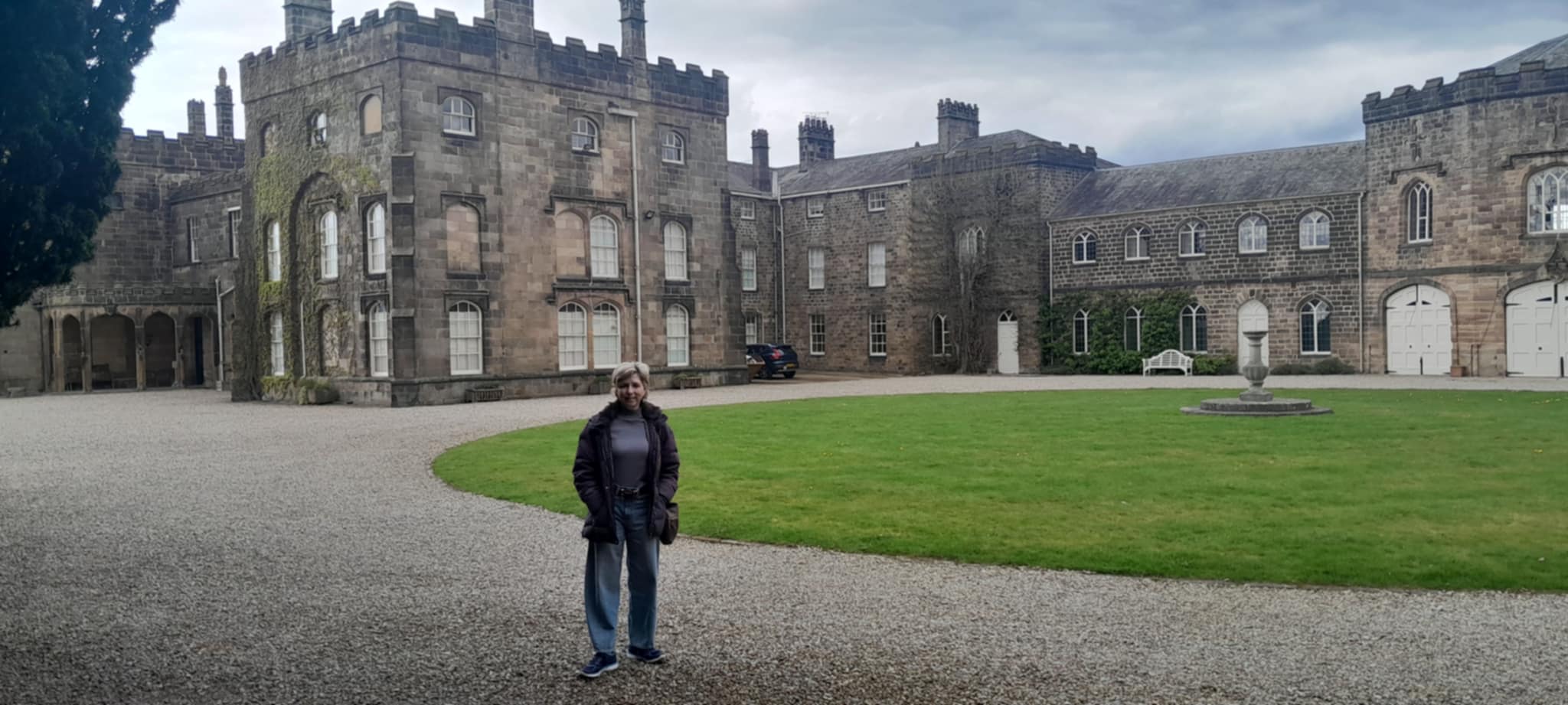
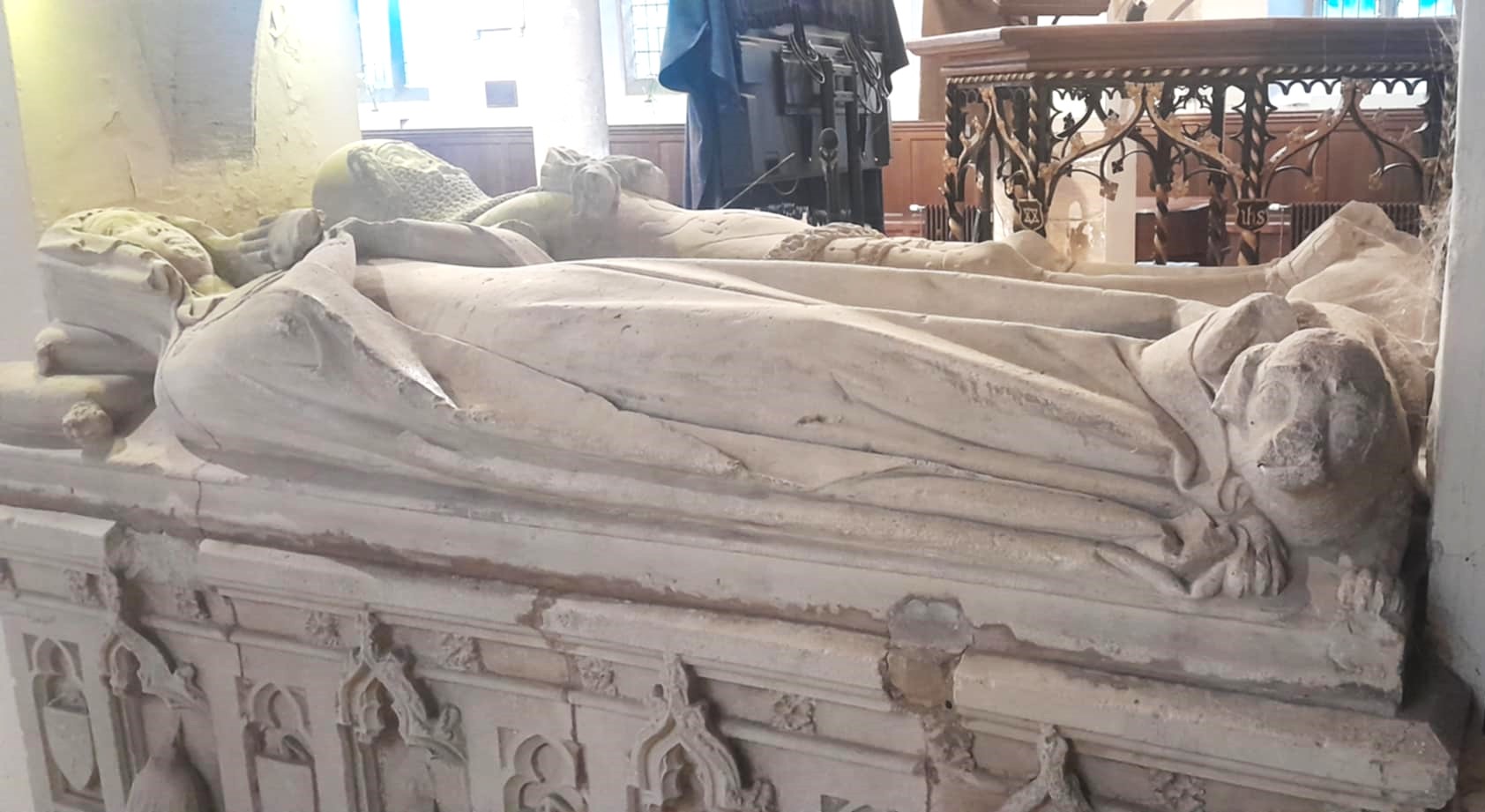
There’s a long list of characters through the ages which is too long and intricate to mention. But there are a few who stand out. Such as Thomas Ingilby who went hunting with King Edward III in Knaresborough Forest in 1357. The king threw his spear at a wild boar, but didn’t kill it so it charged the king’s horse, knocking him to the ground. Thomas Ingilby killed the boar, thus saving the king’s life and was knighted for his valour and granted the boar’s head emblem as his family crest.
Thomas’s brother, Sir Henry Ingilby, enjoyed an equally notable career. Rector of several parishes, he was appointed Master of the Rolls and Keeper of the Writs, serving under the Lord Chancellor William Edington. He also oversaw the network of royal horse dealers who bought horses for the royal household, then sold them at a profit: the proceeds were used to build Windsor Castle.
Sir John Ingilby inherited the estate from his father at the age of five and later become a monk at Mount Grace Priory and was appointed prior of Sheen. He went on to be the first of three executors for Queen Elizabeth, wife of Edward IV, in 1492. As Henry VII’s special ambassador to Pope Innocent VIII, the king described him as ‘my captain and envoy’ in one of the letters that John delivered to the Pope.
In the 1500s, an interesting new turn of events occurred when Francis Ingilby (grandson of John) received a “heavenly visitation” while staying at Ripley and became a Catholic seminary priest, spreading the word in an attempt to overthrow the established religion and government of England (Protestantism). This was at a time when Catholicism was frowned upon in England and his views caused him to be imprisoned, then hung, drawn and quartered. Four centuries later in 1987, Francis was beatified by Pope John Paul II for his martyrdom.
His brother David (1547-1600) became known as ‘the Fox’ for his ability to outrun his pursuers. He was the man who guided the seminary priests around the North of England, leading them from one safe house to another. He married Lady Ann Neville, daughter of the exiled earl of Westmoreland – and another staunch Catholic. David was heavily implicated as a co-conspirator of John Ballard in the Babington treason, a conspiracy to remove Elizabeth I from the throne and replace her with Mary, Queen of Scots. He and Francis were described as ‘the most dangerous papists in the North’. A huge manhunt was launched to find them, and a secret priest’s hiding hole, built to conceal them and other visiting priests while they were at Ripley, was only discovered by accident in 1964.
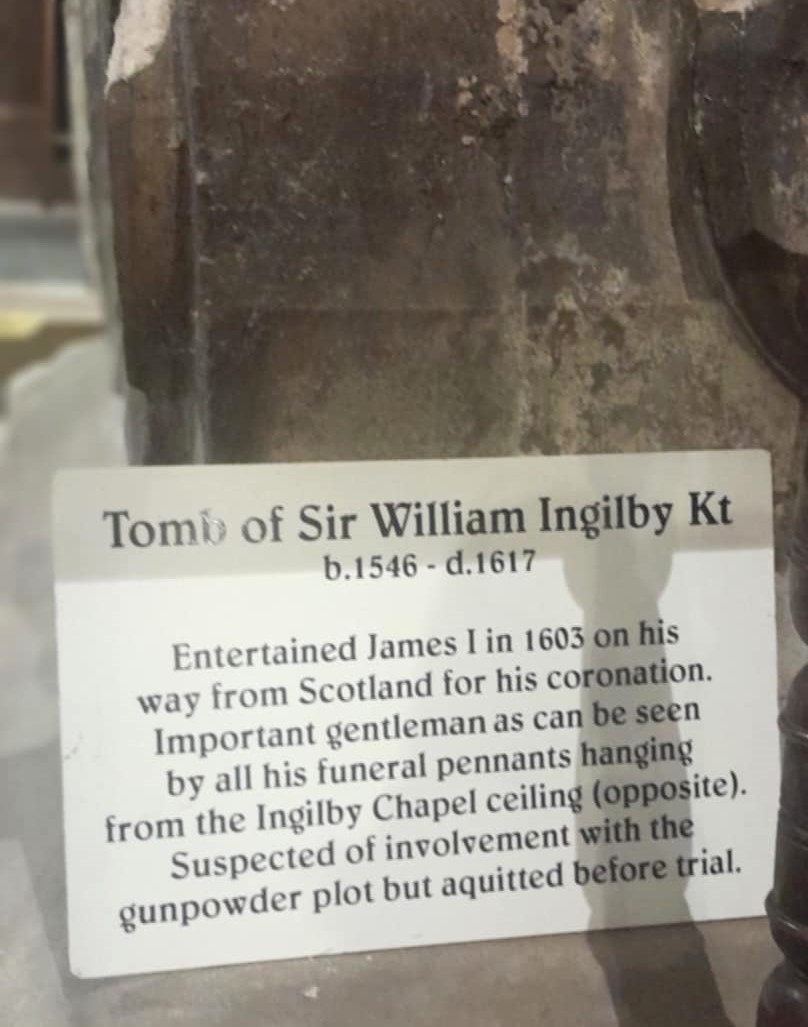
Then, in 1605, a William Ingilby was implicated in a plot to kill King James I (the famous “Gunpowder Plot”) and nine of the eleven known conspirators of the Gunpowder Plot were close relations or associates of the Ingilby family. William was arrested and charged with treason, but was, surprisingly, acquitted of all the charges. The third charge was that of bribing witnesses.
There are so many stories of Ingelbys through the ages (including a famous woman, “Trooper” Jane Ingelby, who fought alongside her brother, William, while disguised as a man in full suit of armour and held Oliver Cromwell at pistol-point to prevent him entering Ripley castle to search for her brother who was hiding in a priest’s secret hiding place). But they weren’t all heroes and knighted gentry.
There was one (Sir William Ancotts Ingilby) who was a drinker, gambler and general reprobate and one (yet another William) who was a dictatorial landlord who disapproved of alcohol being served on the Sabbath and closed down the three pubs in the village when the pub owners refused to close on Sundays (the village remained dry for 71 years until the Boar’s Head opened in 1989). And, as my brother said, there must be some boring folk who didn’t make it into the history books.
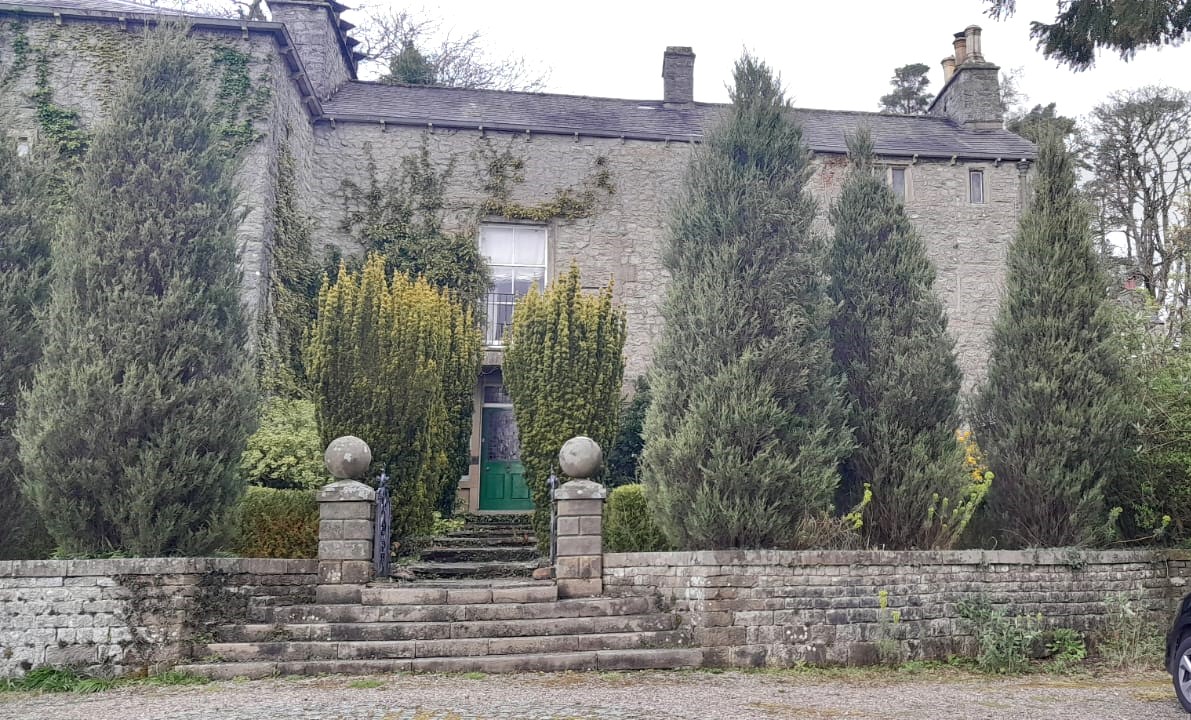
While Skip and I were in Yorkshire, we were invited to coffee by a delightful man named Michael Pearson who, along with his partner, Eric, own Austwick Hall (one of the former Ingelby residences). We sat in their enormous living room, sipping coffee and learning more about the Ingelby family who occupied the house (then drove by the owner-occupied Lawkland Hall, another Ingelby mansion). A lovely connection born from searching into the past.
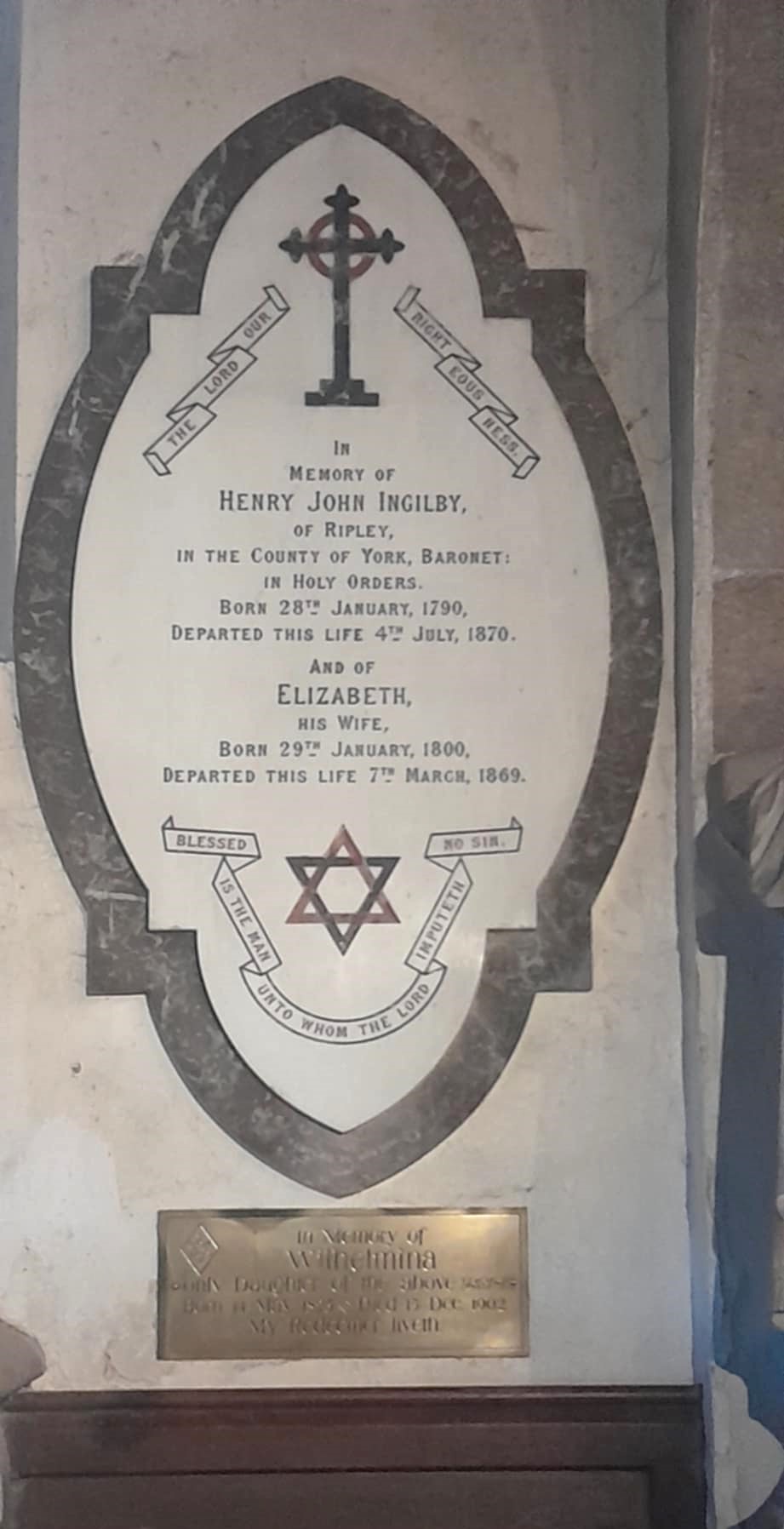
Finally, after visiting Ripley castle, we stopped into the adjacent All Saints church (built by Sir Thomas Ingelby in 1395) where I meandered in amazement: tombs, plaques, dedications and memorials to the Ingelby family. My ancestors.
It was an indescribable feeling. To lift the veil on my ancestral past and get a glimpse into the world of those who came long before me. My only regret is that I can’t share these discoveries with my mother who would be fascinated to learn about them (even though King Orry was no longer a consideration).
And even after we returned home, I was still discovering surprises. The present owner of the castle – Lady Emma Ingilby – attended the Guildhall School of Music and Drama in London to train to be an opera singer. The same school my mother attended in the 1940s.
During the 12-day trip, there were many experiences that made me reflect. But the one which probably struck me most was standing in the graveyard in Liverpool. Knowing that those buried beneath my feet were part of my mother’s family: a baby, her mother, my great-great-grandparents. Forgotten by the world.
With the exception of someone who now lives in Eastbourne who decided to pursue her family lineage and bring roses in remembrance of those long gone. Me.
What a lovely tribute—and how rich the human experience!
That must have been an amazing experience for you. You found out so much. And 19th in line for the throne? The way they’re disqualifying heirs, you’ll be in the top 10 any week now.
Such a wonderful trip, and what a remarkable lineage, but no surprise as royalty (and shenanigans) suits you!
Remarkable to living in the right time and place to access all your discoveries Gabi. Your super sleuth abilities pay off once again! (Love the casino conversation…) Not too shabby of a cohort too.